



Japanese vs Western Tableware: Design, Craftsmanship & How They Change the Way You Eat
A Table, Two Philosophies
There is a subtle difference you can feel the moment you sit down.
In many Western homes, dinner is served on a single large plate — practical, efficient, familiar. In Japan, a meal unfolds across multiple small dishes, each carefully chosen, each with its own role. Japanese tableware and Western dinnerware aren't just different in style. They reflect two completely different ideas about what a meal is for.
What it actually feels like
Picture the same breakfast, twice. On a wide white Western plate: eggs, toast, fruit arranged efficiently in one composition. Functional. Clean. Forgotten the moment you finish.
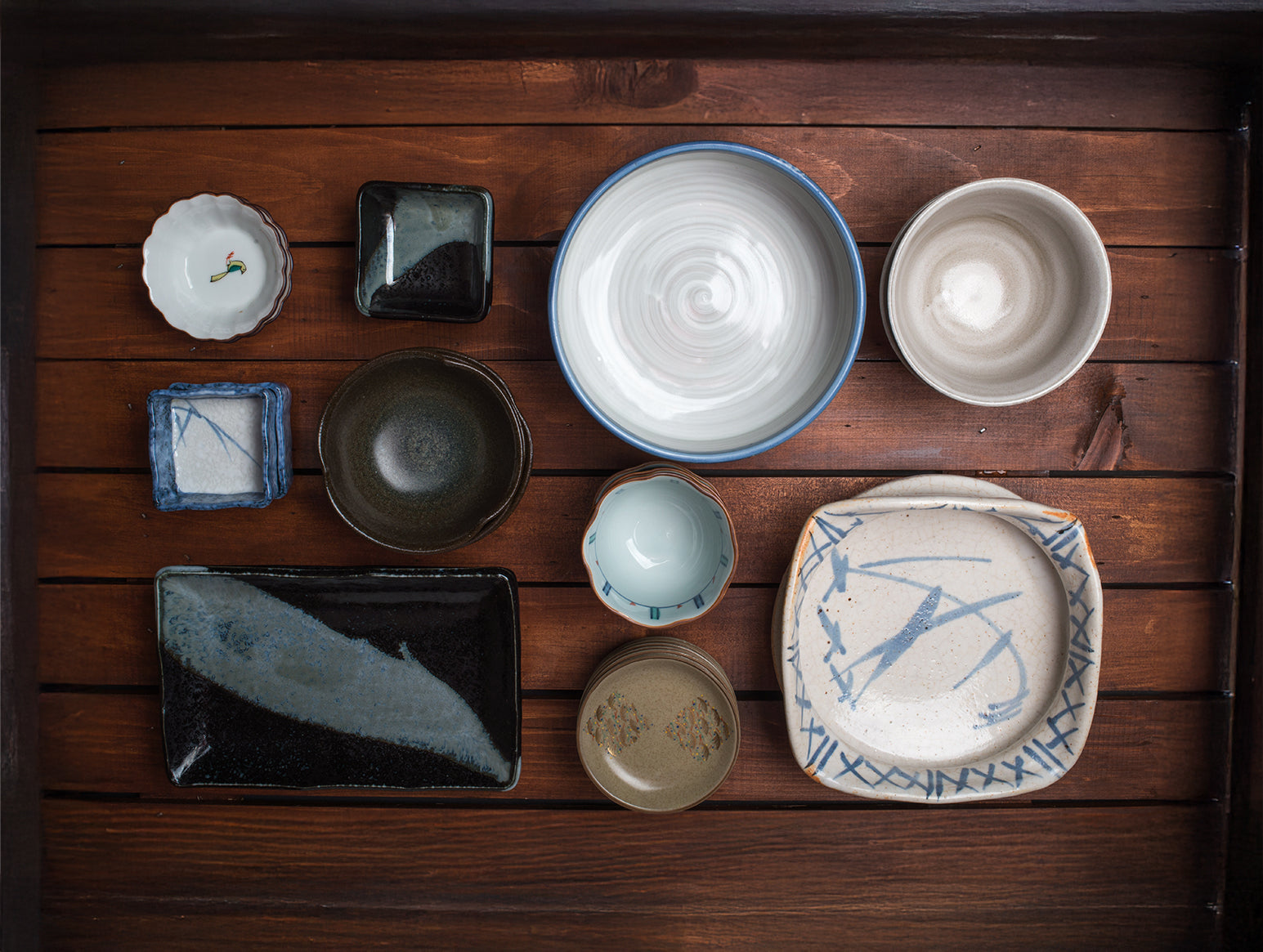
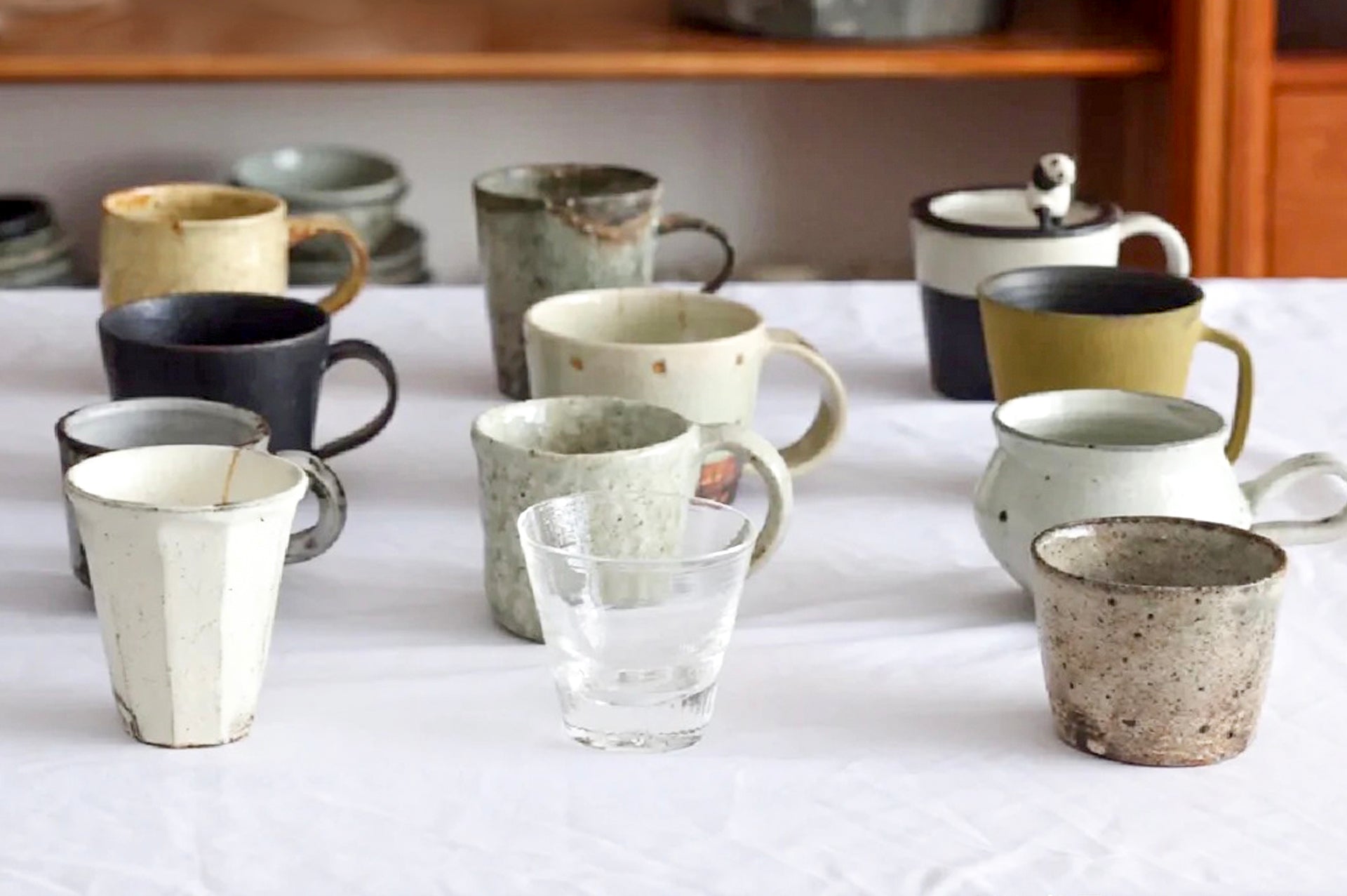
Now the same food, served across two or three Japanese pieces — a small handmade for rice, a narrow plate for the side, a ceramic mug that sits warm in both hands. Suddenly the table has a rhythm. You slow down slightly — not because you decided to, but because the objects asked it of you.
This is the difference that's hard to explain in a product description, but easy to feel on a Tuesday morning.
1. Design Philosophy: Imperfection as Beauty

Japanese tableware is deeply influenced by wabi-sabi — the idea that beauty lies in imperfection, irregularity, and the passage of time. A plate may not be perfectly round. A glaze may vary from one piece to another. These are not flaws — they are the signature of the maker.
Western dinnerware, by contrast, values symmetry, consistency, and flawless finishes. Both are beautiful. But one feels manufactured, the other feels human.
2. Form & Function: One Plate vs Many

Western dining typically centers around a single plate — everything in one composition. Japanese dining breaks this apart: small plates for side dishes, bowls for rice and soup, individual pieces that create a visual rhythm across the table. This approach changes the pace of a meal. It turns eating into something closer to a quiet ritual.
3. Surface & Story: Decoration vs Expression


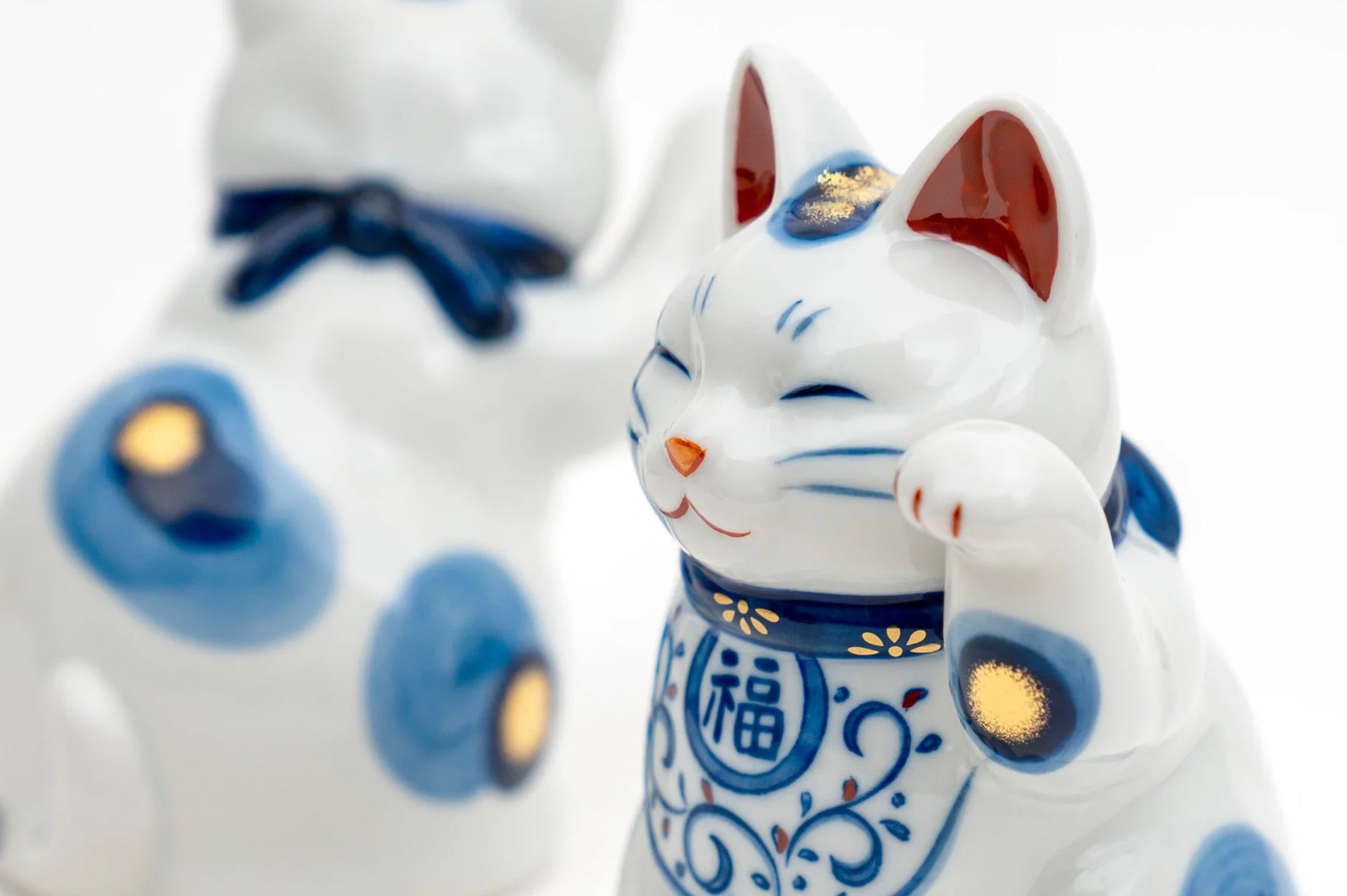
Japanese ceramics are not just designed — they are expressed. From the vivid storytelling of Kutani ware to the quiet earthy tones of Mino ware, each piece carries a distinct identity. Western dinnerware often leans toward restraint: neutral palettes, subtle patterns, uniform sets. Japanese tableware allows each piece to stand on its own — like a small work of art that happens to hold your food.
4. Craftsmanship: Made by Hand, Meant to Be Felt

Many Japanese ceramics are still made in small batches by artisans. You may notice slight variations in shape, subtle differences in glaze, textures that feel alive in your hands. These details are intentional. Mass-produced tableware serves a purpose. Handcrafted Japanese tableware creates a relationship — between the object, the maker, and the person using it every day.
5. The Experience: Eating vs Appreciating
In Japanese culture, tableware is part of the experience — not just a tool. Presentation matters. Seasonality matters. The feeling of the object in your hand matters. In many Western settings, tableware is designed to be invisible — functional, but secondary to the food itself. Japanese tableware flips this entirely: the object is part of what you're enjoying.
The real difference
The difference isn't just aesthetic. Japanese tableware asks you to slow down — to notice what's in the bowl, how it feels in your hands, how the table looks before anyone sits down. That's not something Western dinnerware was designed to do. And for a lot of people, that distinction is exactly what they were looking for.
Why we chose this over everything else
When we started Great Zakka, we spent time with a lot of different tableware — Western, Scandinavian, Japanese. What kept drawing us back to Japanese ceramics wasn't aesthetics alone. It was how these objects changed behavior. People slow down. They notice the food more. The table feels like it was set with intention, even on a weeknight. That's what we source for — not novelty, but that quiet shift in daily life.

Bringing This Philosophy Home
You don't need to change everything at once. Start with one piece — a small plate, a tea cup, a bowl you reach for every day. Over time, your table begins to feel different. More personal. More intentional. More yours.
Explore our curated collection of authentic Japanese tableware, featuring handmade pieces from Kutani, Shigaraki, Mino, and beyond.

Explore our curated collection of authentic Japanese tableware, featuring thoughtfully selected pieces from Kutani, Shigaraki, Mino, and beyond.


Leave a comment