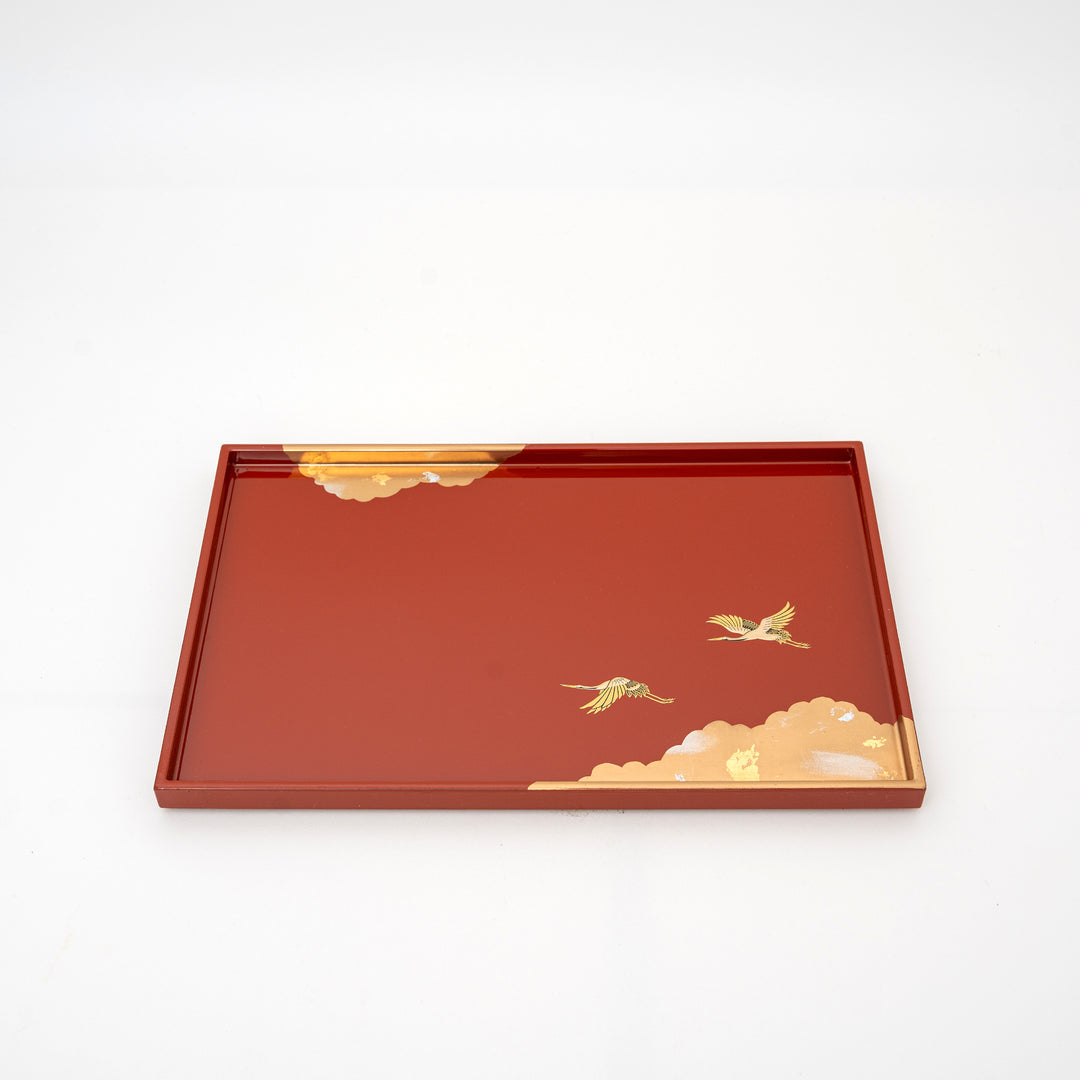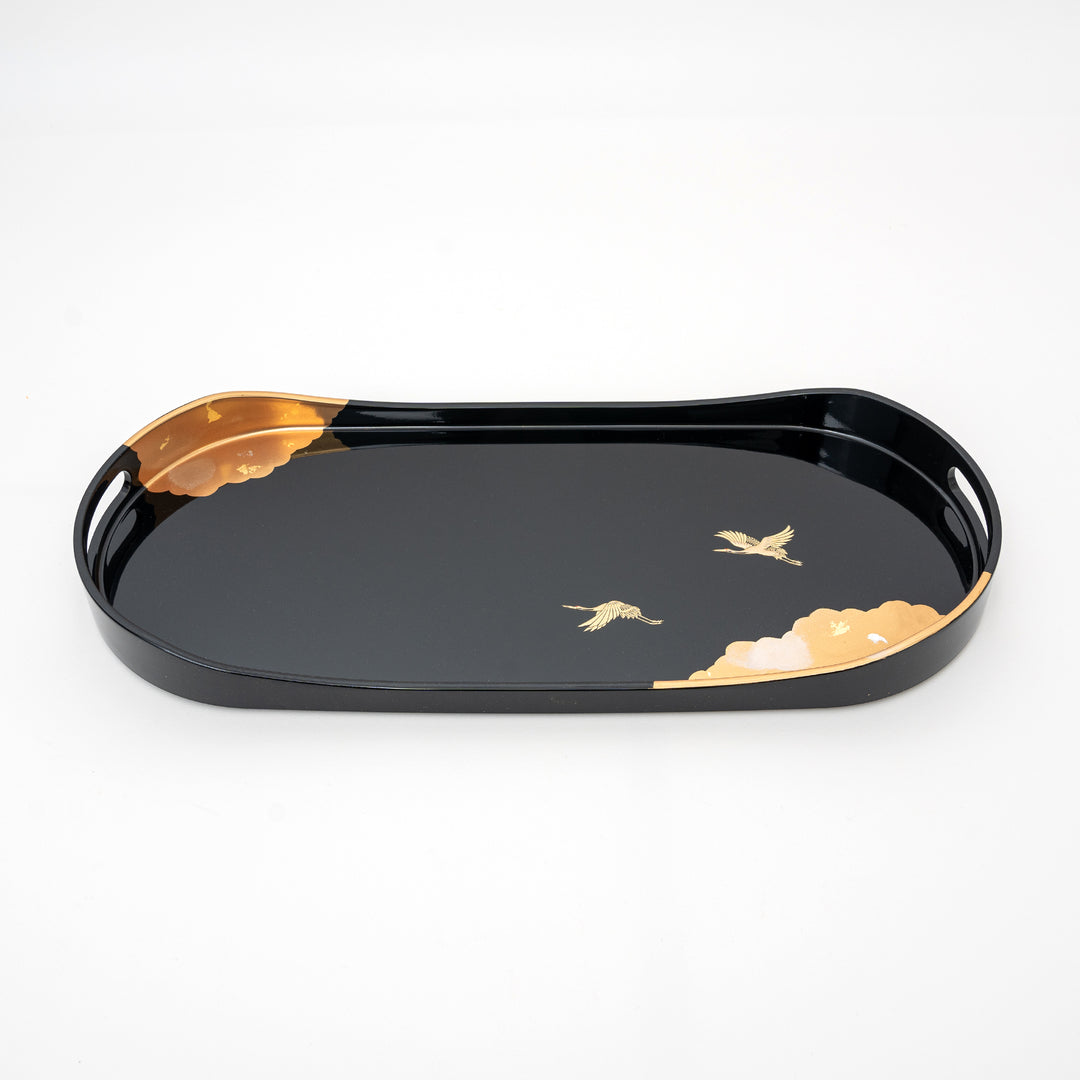

The obon (お盆) — the Japanese serving tray — occupies a quiet but essential place in Japanese daily life and hospitality. Used to carry tea and sweets to guests, to present a meal with care and deliberateness, or simply to organize objects on a desk or dresser, the tray in Japanese culture is a tool of both function and ritual. To arrange objects on a tray is to create a small, curated world — a practice deeply aligned with the Japanese aesthetic of ma (間), the art of meaningful arrangement within a defined space.
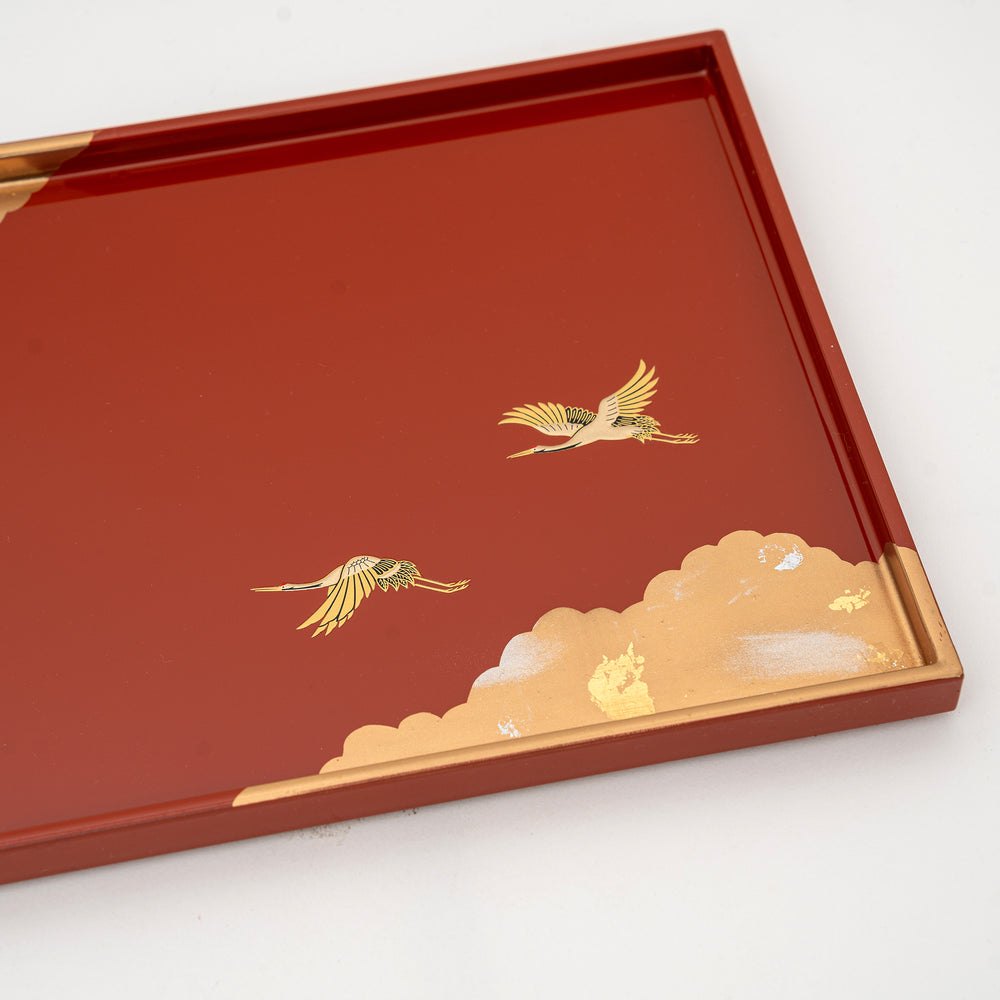
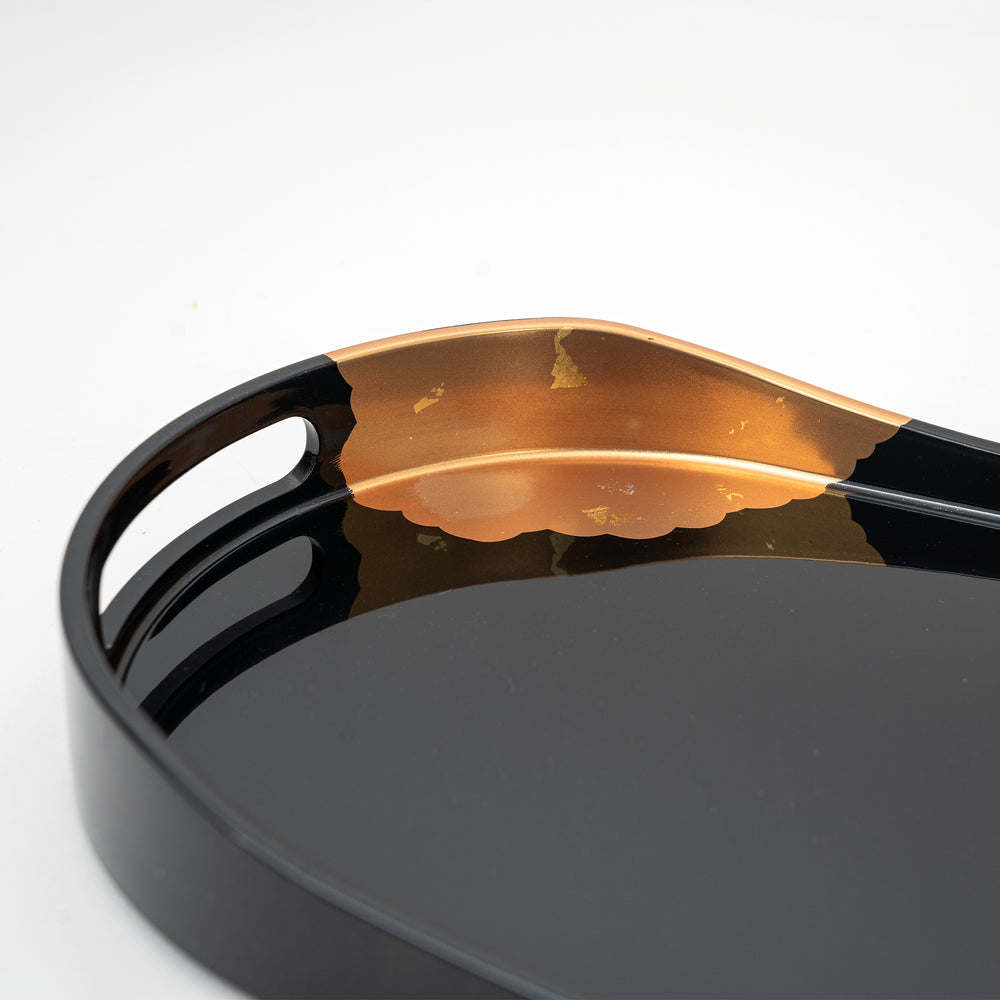
Japanese trays are made from a range of traditional materials, each suited to different purposes. Urushi lacquerware trays — produced by artisans in Wajima (Ishikawa), Echizen (Fukui), and Kyoto — represent the pinnacle of Japanese tray craft. Built on a wooden core and finished with multiple layers of natural urushi lacquer, these trays are extraordinarily durable, water-resistant, and beautiful, often decorated with maki-e (蒔絵) gold and silver powder designs. Bamboo trays offer a lighter, more casual alternative, with a natural texture and warmth suited to everyday kitchen and breakfast use. Ceramic trays bring the weight and permanence of pottery to the format, and are particularly suited to use as incense holders, ring dishes, or decorative surfaces.
At Great Zakka, our tray collection includes lacquerware trays from established Japanese makers, woven bamboo trays from traditional craft regions, and ceramic trays in Mino and Hasami ware with clean, contemporary aesthetics.
Beyond their practical use for tea service and meal presentation, Japanese trays are increasingly used as bedside organizers, entryway catch-alls for keys and cards, and desktop surfaces for a candle, a small plant, and a few carefully chosen objects. Their compact beauty makes any surface feel more considered and calm.
All trays in this collection are made in Japan and ship from our US warehouse, with in-store pickup available in Great Neck, NY.