



Japanese Lucky Figurines (Meaning, Symbolism & Thoughtful Gift Ideas)
If you’ve ever seen a small waving cat in a shop window or a charming animal figurine on a shelf, you’ve likely come across one of Japan’s many “lucky” decorative pieces.
In Japan, these figurines are more than just decoration. They’re often chosen for their meaning — symbols of good fortune, protection, or happiness — and are commonly given as thoughtful gifts.
Why Japanese Figurines Are Often Given as Gifts
Unlike purely decorative objects, many Japanese figurines carry a specific meaning.
They are often used to:
- Celebrate a new beginning (new home, new business)
- Wish someone good luck or success
- Bring a sense of comfort and positivity into a space
Because of this, they’re especially popular as gifts — something small, but meaningful.
Common Types of Japanese Lucky Figurines
Maneki Neko (Lucky Cat)
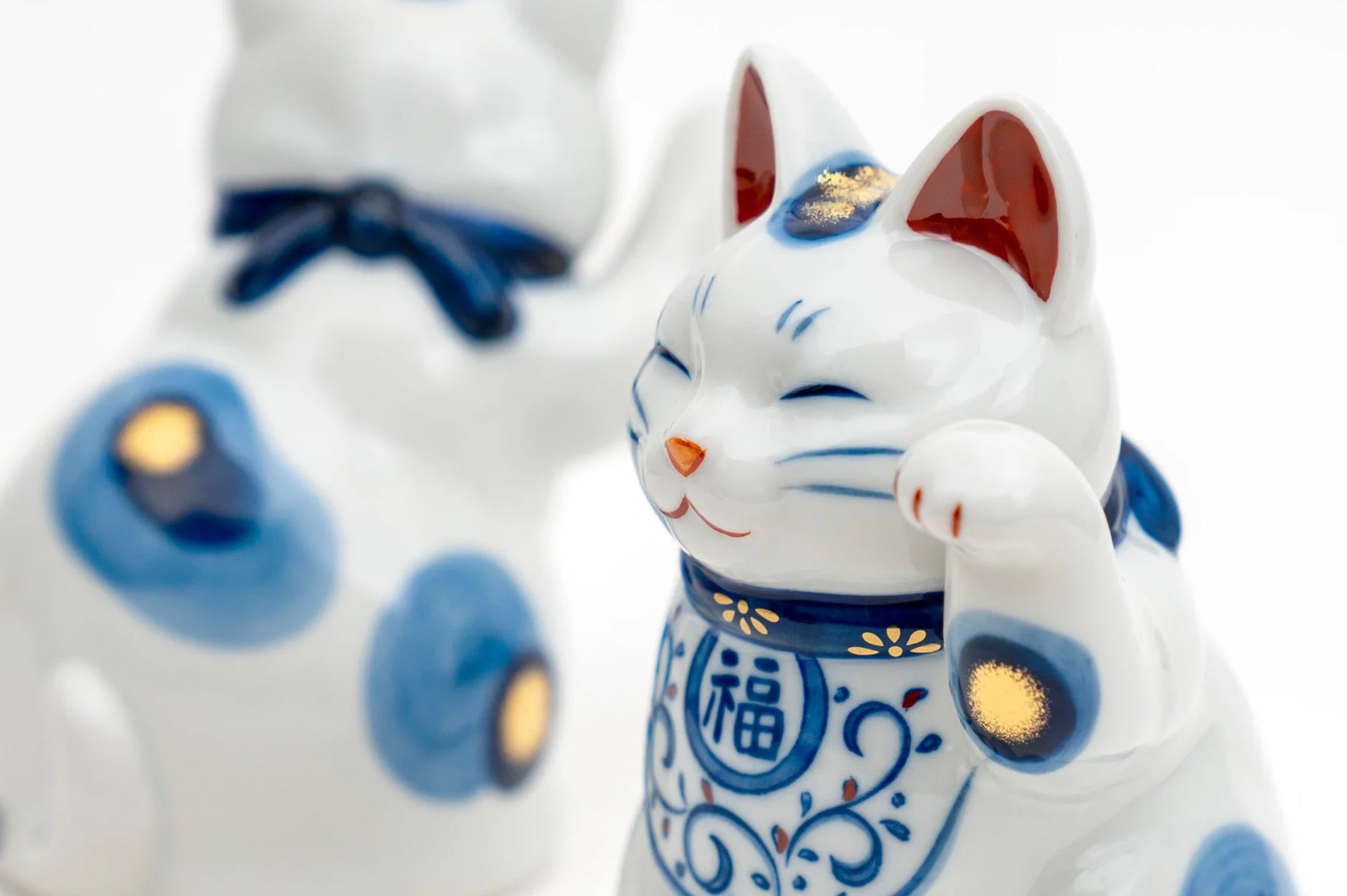
The most well-known of all, the Maneki Neko is believed to bring good fortune.
- Raised left paw → invites people and customers
- Raised right paw → invites wealth and good luck
Different colors can also carry meaning, such as prosperity, protection, or happiness.
Frog Figurines
Frogs are associated with safe return and good fortune.
In Japanese, the word for frog (“kaeru”) is also associated with “return,” which is why frog figurines are often given as a wish for safe travel or things returning to you — whether it’s money, luck, or opportunities.
Shiba Inu Figurines
Shiba dogs are often seen as symbols of loyalty, protection, and companionship.
Their warm and friendly appearance also makes them a popular choice for gifts, especially for those who appreciate animals or cozy home decor.
About Ryukodo
Ryukodo is a long-established Japanese maker known for handcrafted decorative figurines.
Their work focuses on small, detailed pieces that are often given as gifts in Japan. Rather than mass-produced items, many of their designs reflect traditional craftsmanship and seasonal traditions.
In Japan, figurines likethese are commonly used to mark special occasions — including Girls’ Day (Hinamatsuri) and Boys’ Day (Children’s Day) — where decorative pieces are displayed to celebrate family, health, and good fortune.
Rather than focusing on a single symbol, Ryukodo creates a wide range of designs, from lucky cats to frogs, Shiba dogs, and seasonal motifs.
Because of this, their pieces are often chosen not just for how they look, but for the meaning they carry.
How to Choose the Right Figurine
If you’re not sure where to start, the easiest way is to think about intention:
- Looking for a good luck or business gift → Lucky Cat
- Want something symbolic and meaningful → Frog
- Prefer something warm and decorative → Shiba Inu
There’s no strict rule — often the best choice is simply the one that feels right to you or reminds you of the person you’re gifting it to.
A Thoughtful Gift That Feels Personal
One of the reasons these figurines are so popular in Japan is that they feel personal.
They’re small enoughto fit into everyday spaces, but meaningful enough to stand out as a gift.
Whether placed on a desk, shelf, or entryway, they bring a subtle sense of character and intention to a space.
Explore Japanese Lucky Figurines
If you’d like to explore different designs and find one that fits your space or gifting needs, you can browse our collection of Japanese lucky figurines.

Final Thought
Japanese figurines are not just about decoration — they’re about meaning.
They’re often chosen to mark a moment, express a wish, or bring a sense of calm and positivity into everyday life.
And that’s what makes them such a thoughtful gift.


